Iris Otto · 10 October 2026
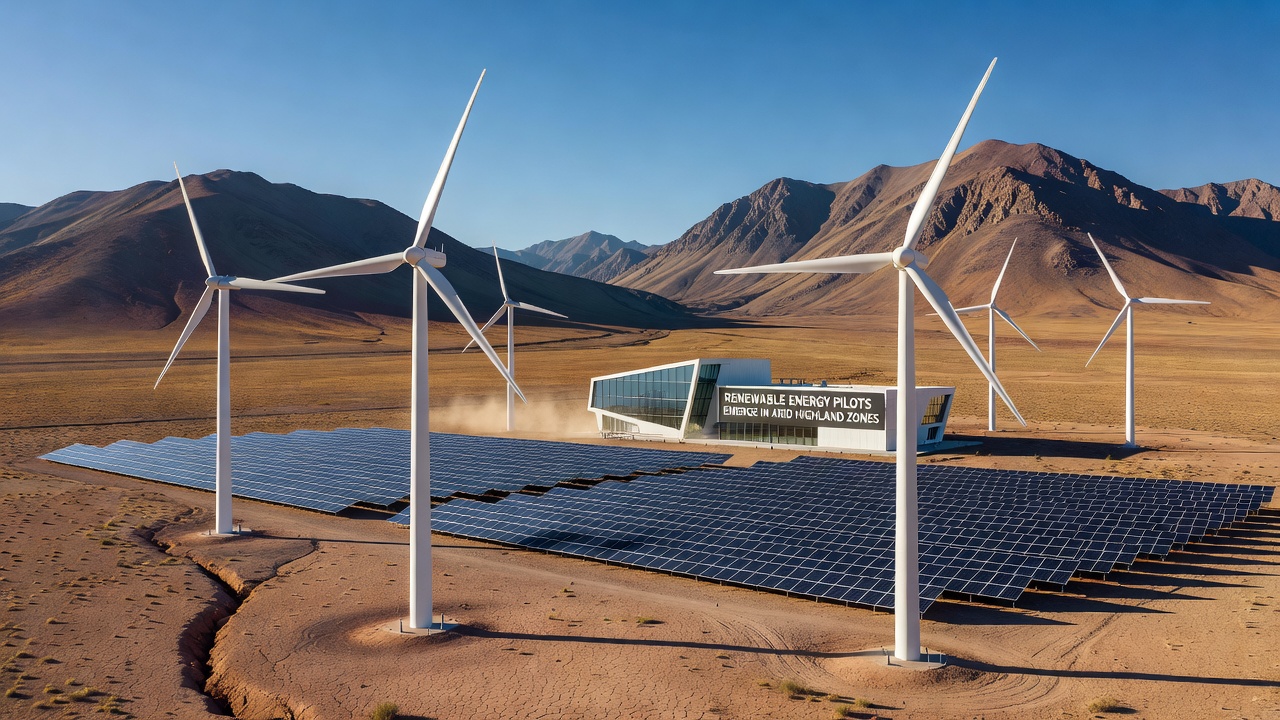
Renewable Energy Pilots Emerge in Arid Highland Zones
Arid highland zones around the world have begun hosting experimental renewable energy projects that combine solar arrays with wind turbines and small-scale geothermal units, and these pilots target regions where elevation exceeds 2000 meters and annual precipitation stays below 250 millimeters. Researchers have tracked how thinner air at these altitudes allows greater solar irradiance to reach ground level, while consistent wind patterns along ridgelines provide additional generation windows that complement daytime solar output.
Geographic Focus and Project Locations
Projects have started in the Andean Altiplano of northern Chile and southern Peru, on the Tibetan Plateau in western China, and across elevated tablelands in central Australia. Data collected through 2025 showed that each site recorded solar capacity factors above 28 percent, compared with 22 percent averages recorded at lower-elevation desert installations. Wind monitoring towers installed in 2024 captured average speeds of 7.8 meters per second at 80-meter hub heights, enough to justify turbine deployment once grid connections reach remote substations.
Technology Combinations Under Test
Engineers have paired bifacial photovoltaic modules with single-axis trackers that follow the sun across wide daily arcs, while vertical-axis wind turbines occupy narrower ridgelines where space remains limited. Hybrid inverters route power into containerized battery banks that store excess midday generation for evening release, and operators have integrated demand-response controls that adjust output according to local micro-grid loads. In October 2026 several Chilean pilots added molten-salt thermal storage units that retain heat collected during peak sunlight hours, extending usable electricity delivery into nighttime hours when highland communities require lighting and water pumping.
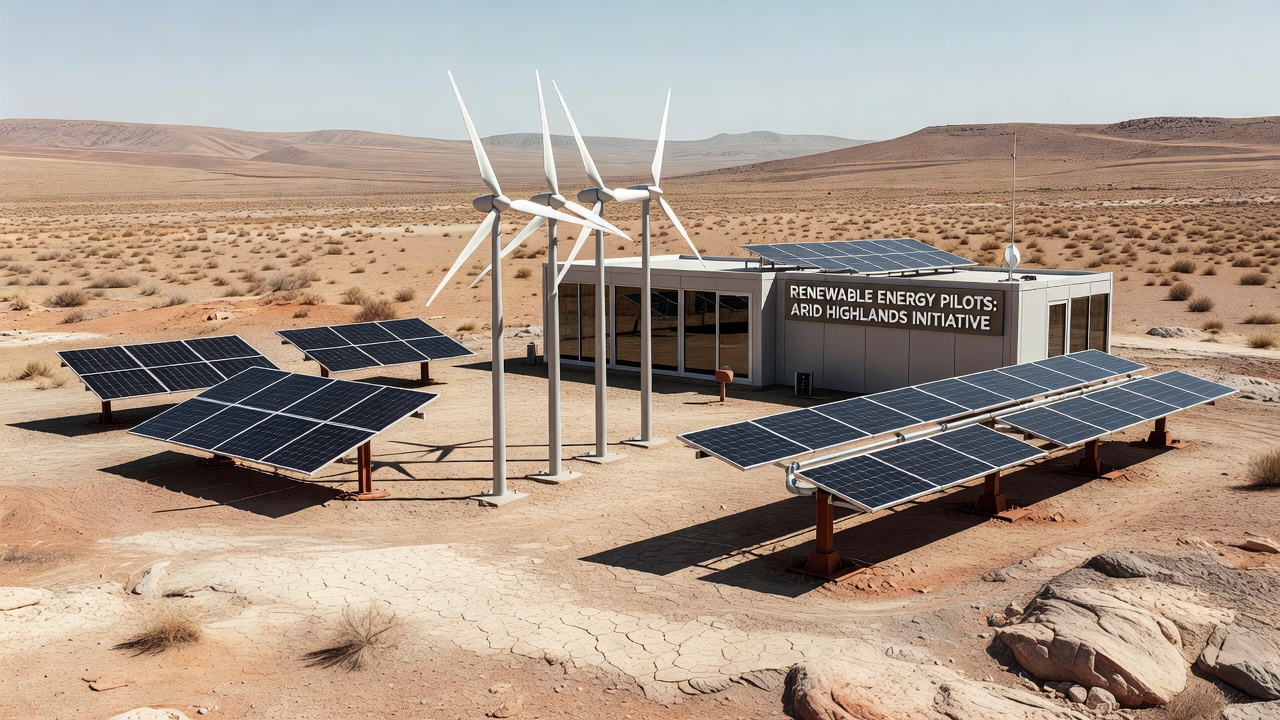
Geothermal test wells drilled to 1500 meters have encountered temperatures near 140 degrees Celsius in fractured volcanic rock beneath the Altiplano, and operators now circulate working fluids through closed loops that feed organic Rankine cycle generators. These units produce steady baseload power that offsets the variability of solar and wind resources, and preliminary figures released by project consortia indicate capacity factors approaching 85 percent for the geothermal portions alone.
Grid Integration and Transmission Planning
High-voltage direct-current lines under construction will carry power from highland sites down to coastal demand centers, yet planners continue to evaluate whether local hydrogen production could serve as an alternative export method that avoids long-distance line losses. IRENA analysts have modeled scenarios in which highland hydrogen hubs supply industrial users along the Pacific coast by 2030. In parallel, Australian grid operators have begun testing dynamic line rating systems that adjust transmission capacity according to real-time wind cooling effects on conductors at elevation.
Community and Environmental Monitoring
Local cooperatives in Peru have signed power purchase agreements that allocate 15 percent of generated electricity to village micro-grids, while environmental agencies require ongoing monitoring of dust deposition on panels and bird collision rates at turbine sites. Studies conducted by university teams in 2025 documented that panel cleaning schedules tied to seasonal wind patterns reduce soiling losses by 4 percent annually. Observers note that water use for cleaning remains minimal because most sites employ robotic dry-brush systems powered by the arrays themselves.
October 2026 Developments
During October 2026 three new pilot clusters received final environmental permits in the Tibetan Autonomous Region, adding 180 megawatts of combined solar-wind capacity scheduled for commissioning in late 2027. Government agencies there have also approved expanded research budgets that fund drone-based thermographic inspections of panel strings and lidar mapping of wind shear profiles across complex terrain.
Conclusion
Arid highland zones continue to attract investment because resource assessments demonstrate consistent high yields, and the combination of multiple renewable technologies within single pilot footprints reduces overall variability. Transmission infrastructure and storage solutions remain the primary constraints, yet ongoing projects scheduled through 2028 will supply further performance data that regulators and utilities can use to scale successful designs.